
Why Does My Breaker Keep Tripping? Causes and Safe Fixes
A breaker that keeps tripping isn't malfunctioning. It's answering a real problem somewhere in the circuit, and the work is figuring out where. In most homes the cause lands in one of three buckets: too many devices drawing on a single circuit, a fault buried in the wiring or an appliance, or a panel that no longer has the capacity the house demands.
Table of Contents
The Quick Answer to Why Your Breaker Keeps Tripping - What a Repeated Trip Usually Means - Match the Pattern to a Safe Next Step - Stop Resetting It Until You Know Why
How a Circuit Breaker Protects Your Home - Picture Your Home's Protective Layers - Separate Excess Demand from Electrical Faults - Why the Trip Can Wait or Hit Instantly - Find What Shares the Circuit - Spread the Load Before You Reset
Faults, Damaged Wiring, and Failing Breakers - Recognize Fault Patterns Without Testing Them - Overload Versus Fault Symptoms - Treat Arcing and Breaker Failure Seriously - How Growing Demand Outpaces the Panel - Why a Bigger Breaker Does Not Solve It - Signs an Evaluation Is Worth It - Upgrade Options to Discuss - Start With a Simple Safety Checklist - Why a Bigger Breaker Is Not a Fix - Write Down What You Noticed - Situations That Need a Professional Now - What a Qualified Inspection Usually Covers - Is It Safe to Reset an Occasional Trip - Tell an Overload From a Fault - Replace the Breaker or Check the Panel
The Quick Answer to Why Your Breaker Keeps Tripping
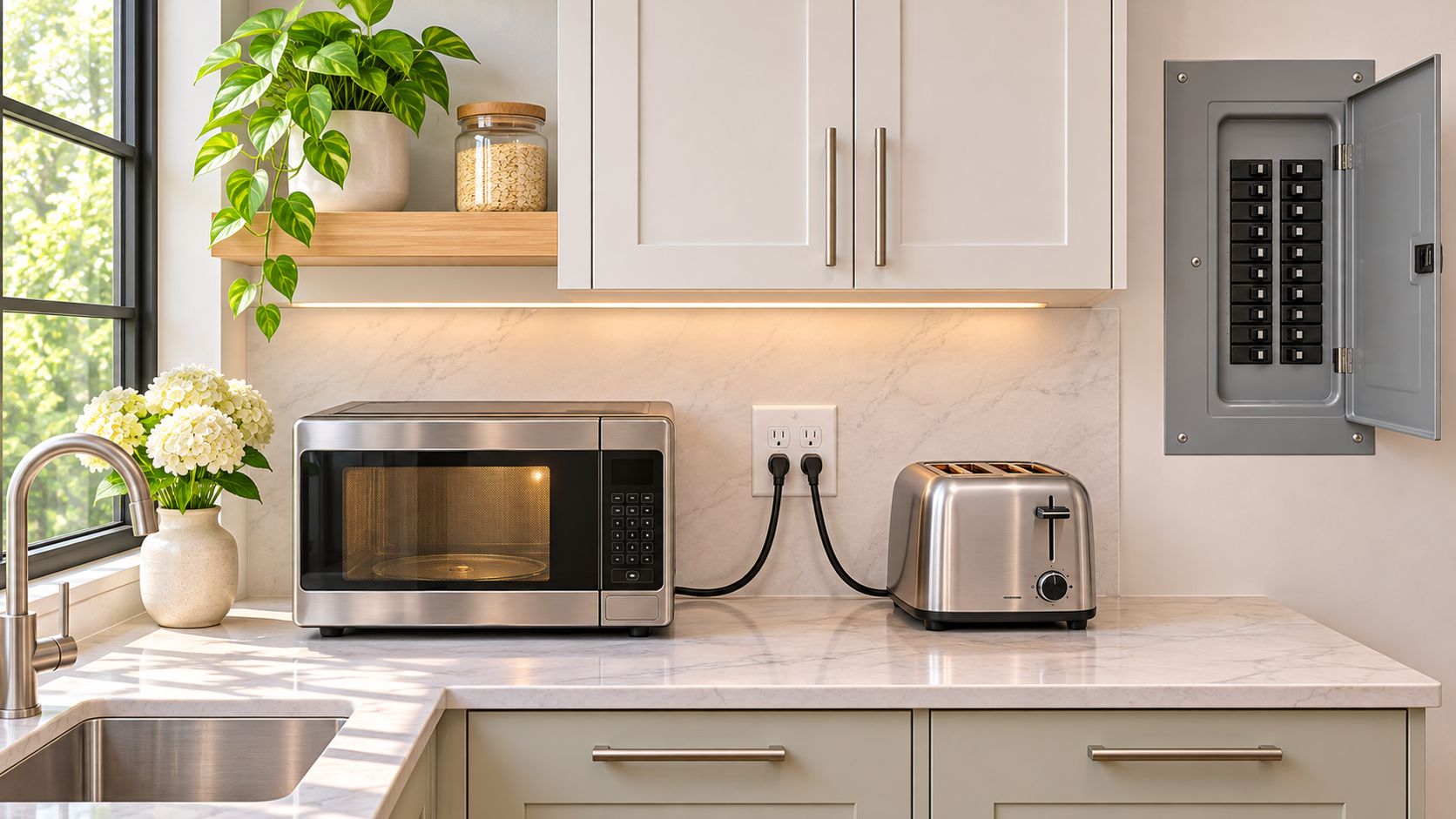
The microwave and the toaster fire up at the same moment and the kitchen goes dark. It feels like something failed. Most of the time, nothing did — the breaker did precisely what it was installed to do.
It killed the power before the wire inside the wall could get hot.
What a Repeated Trip Usually Means
One trip after a heavy load is unremarkable. The same breaker letting go again and again is the part worth paying attention to.
Overload. Several devices share one circuit and pull more current than the wire is rated to carry.
Fault. A short, damaged wiring, or a failing appliance shoves current down a path it should never take.
Panel limit. The service was sized for how the home used power years ago, and demand has outgrown it.
Timing tells you a lot here. An overload usually trips after a delay, once heat has had time to build. A fault usually trips the instant it happens.
Repeated trips are a message, plain and simple. Figure out what the breaker is reacting to before you restore power again.
Match the Pattern to a Safe Next Step
Trip pattern | Likely cause | Safest next step |
|---|---|---|
Trips when several appliances run at once | Overloaded circuit | Unplug extras and spread the load across circuits |
Trips the moment one device starts | Faulty device or wiring | Unplug it and leave the breaker off |
Several circuits trip during normal use | Panel capacity limit | Have the panel and service checked |
Won't reset, or smells burnt | Damaged connection | Call a licensed electrician |
Stop Resetting It Until You Know Why
Flipping the handle back on over and over doesn't solve anything. It hides the problem, and if a fault is behind it, every reset pushes current into a connection that's already running hot.
That habit is how small electrical problems turn into house fires.
Shut the loads off on that circuit, write down what was running when it tripped, and leave any breaker that won't hold a reset in the off position.
Across the Denver metro, the licensed electricians at On Time Home Services can test the circuit, trace the source, and tell you whether the fix is a single repair or a bigger correction. Prompt visits are available when a tripping breaker won't wait.
Think of a breaker as the pressure valve on a cooker. The valve lets out steam before things get dangerous, and the breaker cuts power before too much current heats up the wires behind your walls.
How a Circuit Breaker Protects Your Home
A branch circuit is one route through your home's wiring. It feeds a group of outlets, a few lights, or a single appliance. The breaker watches that entire route, not just the gadget you happened to be using when the power dropped.
Say a bedroom outlet and a hallway outlet share a circuit. Plugging a space heater into one or the other won't change which breaker is doing the work.
Different outlets don't always mean different circuits. It helps to picture the wiring as a tree with branches, not a separate wire running to every socket.
When current climbs past safe limits, the breaker opens the circuit and stops the flow. This explanation of circuit breaker protection shows how excess current leads to overheating, and why cutting it off matters so much.
Picture Your Home's Protective Layers
Power reaches your appliances through a chain of connected layers. Here's a simplified version of how it flows through a typical house:
Electrical service brings power into the property.
Main panel and main breaker spread that power out and protect the supply as a whole.
Branch breakers guard the individual circuits that feed outlets, lights, and equipment.
Each layer has its own job. A branch breaker can trip while the rest of the house keeps running. Plenty of total capacity in the house doesn't change the limit on any single circuit.
That's also why adding panel capacity rarely fixes one troublesome outlet. Knowing when a panel evaluation makes sense helps you tell a local circuit problem apart from a bigger capacity issue.
Separate Excess Demand from Electrical Faults
Asking "Why does my breaker keep tripping?" is a good start, but the answer depends on what kind of problem you're dealing with. Electricity is either following its intended route in too great an amount, or it has found a route it was never supposed to take.
Overload means connected equipment is pulling more current than the circuit can safely carry.
Short circuit means an unintended connection lets a dangerous surge of current flow.
Both can set off overcurrent protection, but they call for different investigations. A short isn't just a bigger version of plugging in too many appliances. This comparison of electrical faults breaks down the difference in more detail.
If the trips keep coming, write down which breaker opened and what was running at the time. Then arrange troubleshooting with On Time Home Services instead of guessing which layer needs attention.
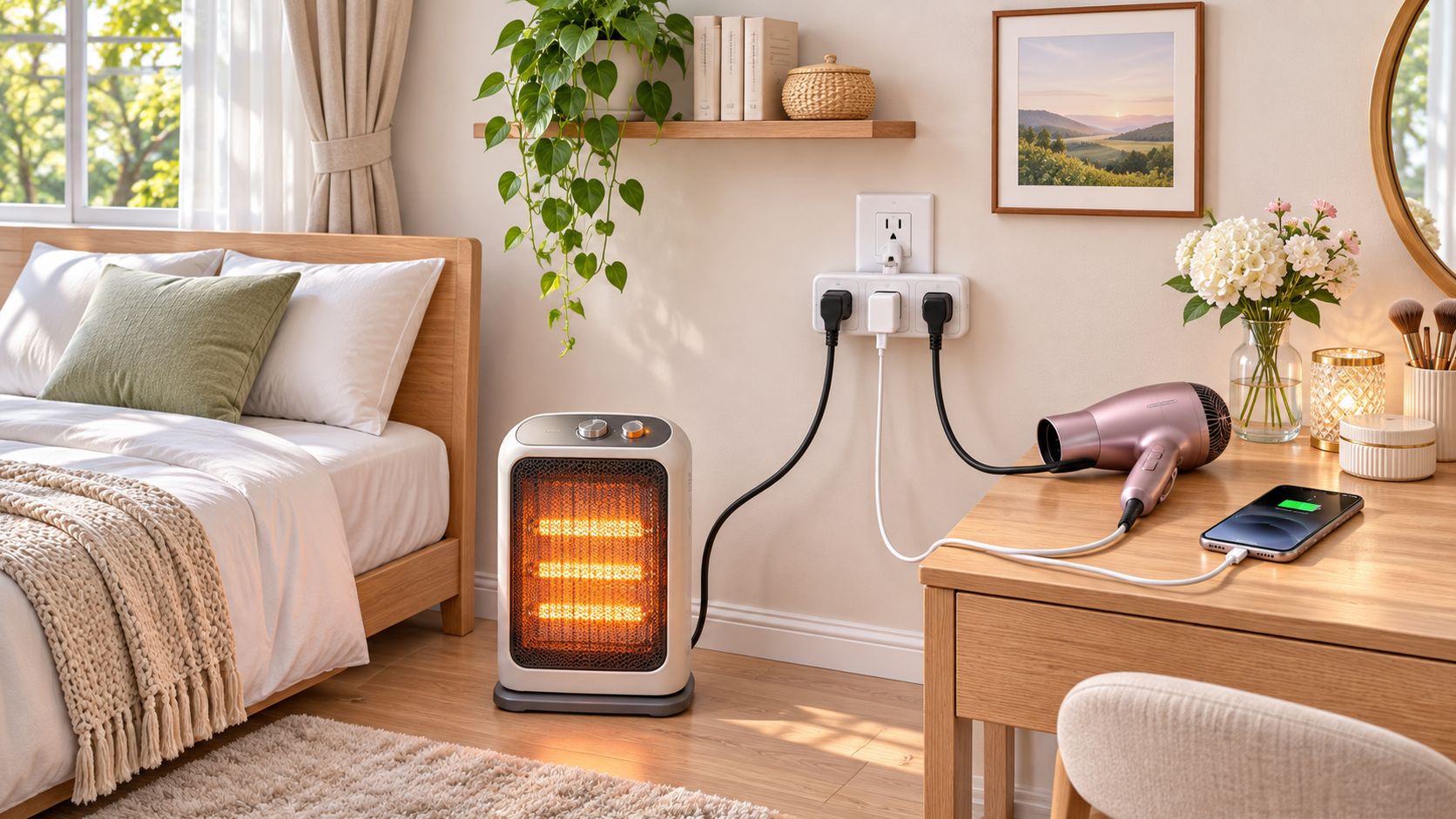
Most of the time, when someone asks why their breaker keeps tripping, the answer is an overload. That sounds scarier than it is. Nothing in the wall has to be broken. The circuit is just being asked to carry more current than its wire can handle before it starts to heat up.
Picture a bedroom circuit feeding a space heater, a hair dryer, and a phone charger. Each one seems harmless on its own. Run them together, though, and you can push a 15 amp branch past the limit the wire was built for.
Why the Trip Can Wait or Hit Instantly
Heat builds slowly. Current warms the wire a little at a time, much like a kettle that takes several minutes to start whistling. That is why an overloaded circuit often runs fine for a while and then cuts out once the wire gets hot enough.
A motor start works differently. A refrigerator compressor or a power tool can pull a short, sharp burst of current the moment it kicks on. The breaker may trip right then, even if the circuit seemed fine a minute earlier.
An overload is not a broken breaker. It is demand that has gone past what the circuit can safely deliver.
Find What Shares the Circuit
You can't tell which outlets and lights share a wire just by looking at the wall. Mapping them out takes a few minutes and a helper, or at least a lamp you can keep an eye on from the panel.
Switch off one breaker and leave the others on.
Walk the room and note every outlet and light that goes dead.
Label that breaker with the rooms and devices you found.
Turn it back on, then repeat with the next breaker.
Unplug the big draws while you test. A space heater left running on a live circuit can trip the breaker again before you finish the map.
Spread the Load Before You Reset
Once you have the map, the fix is often simple. Move the heavy users apart.
Plug the space heater into a different circuit from the hair dryer.
Stagger appliances so two high-power devices aren't running at the same time.
Leave phone chargers and lamps where they are. They rarely cause a trip on their own.
If the same circuit still trips after you've spread things out, the room may simply not have enough capacity for how you use it. At that point, a dedicated circuit for a heater, or a full panel review, is the better next step. Another reset won't solve it.
Licensed electricians at On Time Home Services in Denver can measure the actual load and tell you whether spreading out your devices is enough.
Not every trip means you're drawing too much power. A damaged cord or a failing appliance can interrupt a circuit that's barely loaded at all. In those cases, the condition of the equipment matters just as much as how many devices are running.
Faults, Damaged Wiring, and Failing Breakers
A short circuit gives electricity an unintended shortcut, and current can surge through it fast. A ground fault works a little differently. Current leaks toward ground along a path it was never meant to take, such as damaged insulation touching a grounded metal box. If you want a closer look at how these two differ, read this ground fault versus short circuit guide.
Think of insulation as a fence that keeps current on its own road. Once that fence breaks, electricity can wander somewhere dangerous instead of simply backing up like cars in a traffic jam.
A trip is a warning, not a diagnosis. Timing gives you clues, but on its own it can't tell you which component failed.
Recognize Fault Patterns Without Testing Them
Suppose you keep asking yourself, "Why does my breaker keep tripping?" Start by looking at what was happening right before each trip. If the breaker goes every time one particular appliance kicks on, a damaged cord or an internal defect could be the culprit. That said, a motor's startup surge can produce a very similar pattern, so the clue points somewhere without proving anything.
The breaker troubleshooting guide lists immediate trips, burning smells, and discolored outlets as warning signs that deserve a closer look.
Overload Versus Fault Symptoms
Overloads and faults can look alike from the hallway, but they usually leave different clues. Use this table as a rough guide to what you might be dealing with.
Symptom | Likely Overload | Likely Fault |
|---|---|---|
Trips after several appliances run | Combined demand exceeds the circuit's capacity | Heating connection or equipment defect |
Trips when one device starts | Startup demand exceeds limits | Damaged cord or internal short |
Trips with appliances unplugged | Unlikely, since little is drawing power | Wiring fault or defective breaker |
Outlet smells burned | Not diagnostic on its own | Overheating or damaged connection |
Treat the table as a starting point, not a verdict. These patterns are clues, not permission to keep resetting the breaker to see what happens.
Damaged cord: Stop using any appliance with split insulation or exposed conductors.
Warm or discolored outlet: Stop using it and arrange an inspection.
Breaker won't reset: Leave it off rather than forcing the handle.
Treat Arcing and Breaker Failure Seriously
A loose connection can generate concentrated heat right at a terminal. Arcing, where electricity jumps across a gap, can ignite nearby material even when nothing else on the circuit seems overloaded. These hidden wiring hazards call for prompt professional attention.
A worn breaker is certainly possible. Swapping it out without checking the circuit, though, can leave the real problem exactly where it was.
If you suspect arcing or a failing breaker, take these steps:
Leave the affected circuit off.
Keep suspicious equipment unplugged.
Write down what happened and when, without trying to recreate it.
Before you use that circuit again, call On Time Home Services to schedule licensed electrical troubleshooting in the Denver metro area.
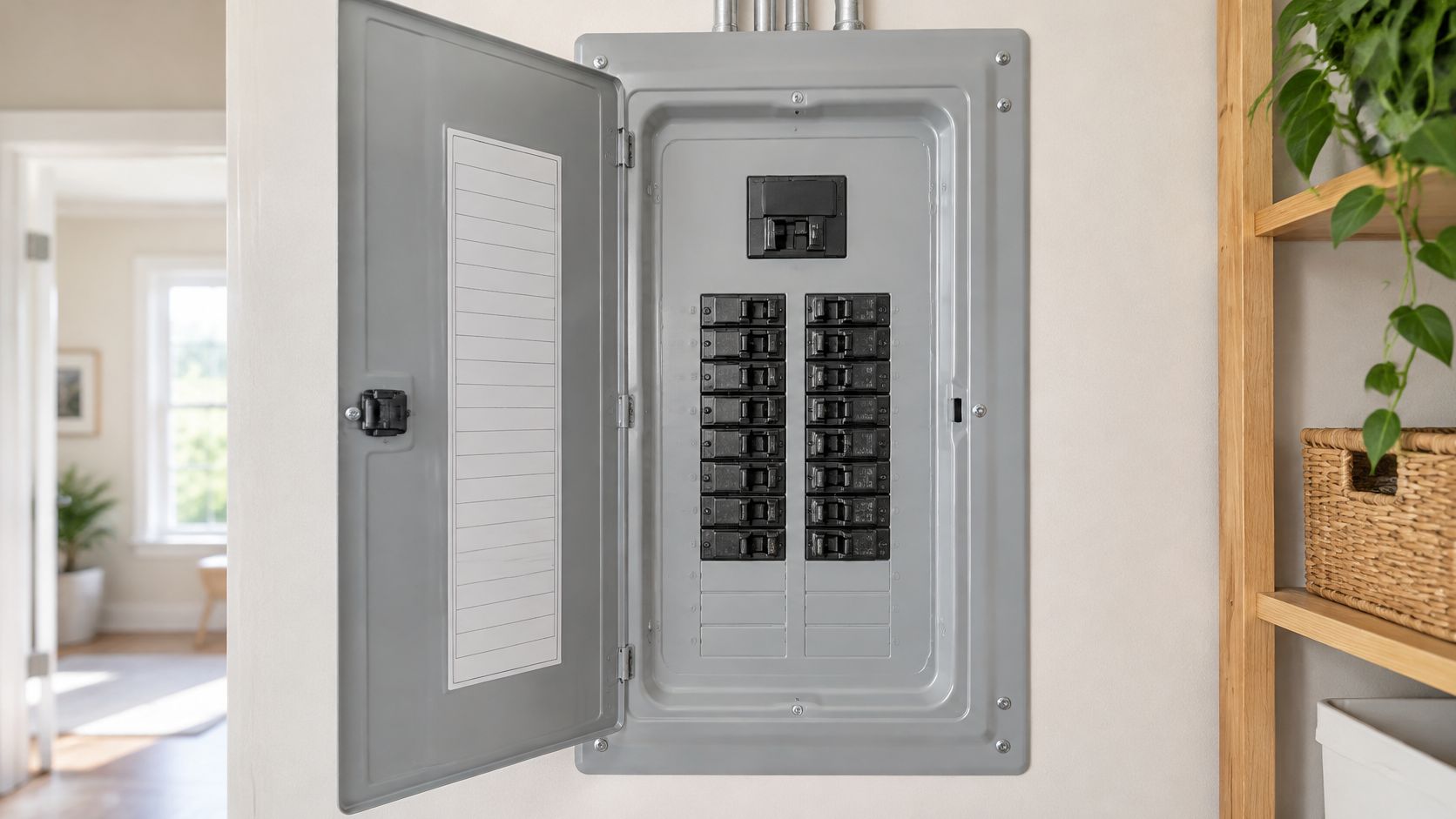
A useful way to picture your home’s electrical capacity is a water main feeding a household that keeps adding fixtures. One extra tap may be no big deal. Bring a shower, dishwasher, and sprinklers online together, and the main itself turns into the limit.
Electrical service behaves much the same. Your panel can supply only so much power at once, even if every device is being used carefully.
How Growing Demand Outpaces the Panel
Take a house built with 100-amp service. Years back, that was plenty for lighting, a range, and maybe a window air conditioner.
Now picture that same house running central air, an electric-vehicle charger, and a hot tub. Each upgrade makes sense by itself. Stacked together, they can ask for more than the service was sized to deliver.
A panel that fit the home you bought may be undersized for the way you live in it now.
Why a Bigger Breaker Does Not Solve It
When a breaker keeps tripping, swapping in a higher-rated one can look like an easy fix. It quiets the symptom while leaving the real problem alone.
Breakers are matched to the wire gauge hidden in the walls. Put in a larger breaker and you remove the protection that keeps those conductors from overheating.
A real evaluation looks at four basics:
Conductors must be sized for the current they carry.
The panel must be rated for the total load.
Grounding must be complete and correct.
Permitted installation must meet local code.
Signs an Evaluation Is Worth It
The pattern matters more than one annoying outage. Have it checked when you notice things like:
Breakers tripping on several circuits during ordinary use
Lights dimming or flickering when large appliances start
New equipment pushing an older system past its comfort zone
A panel with few open slots, or none, for added circuits
Upgrade Options to Discuss
A licensed electrician can run the load math and tell you which fix fits the house. The usual paths are:
200-amp panel upgrade for a home outgrowing 100-amp service
Main panel upgrade when the existing panel is worn or undersized
Electrical service upgrade to raise capacity from the utility connection
The point is never to defeat the protection. It is to correct the capacity limit below it. On Time Home Services has licensed electricians in the Denver metro area who can assess the panel and lay out the right path. You may also want to read this guide on when to replace an electrical panel before you decide.
A tripped breaker is doing its job. It's cutting power before a problem gets worse, so think of it as a pause button, not a puzzle to solve by flipping the handle until the lights stay on. Slow down. Power can come back once you know what you're dealing with.

Start With a Simple Safety Checklist
Work through these steps in order before you try anything else.
Switch the affected breaker fully off. Push the handle past the middle position until it clicks into OFF, then leave it there.
Unplug anything you've added lately, along with any cord that looks worn, feels warm, or seems off. A space heater, a new power tool, or an appliance that buzzes is a good place to start.
Don't restore power just to see if the problem went away. One reset after an obvious overload can be reasonable. A second trip on the same day is your signal to stop.
Every reset sends current back through a connection that has already failed once. It's a bit like jiggling a loose wire to see if it's fixed. That habit is how a small fault ends up melting insulation.
One reset is a test. The next reset is a risk. If the breaker trips again, leave it off.
Why a Bigger Breaker Is Not a Fix
It's tempting to swap in a higher-rated breaker because it seems like a quick fix. It's actually one of the worst moves you can make. The breaker is matched to the wire in your wall, not to how many devices you wish that circuit could handle.
Think of the breaker as the wire's bouncer. A bigger breaker lets more current through before it steps in, so the wire can overheat with nothing to stop it. Only a licensed electrician should change a breaker, and only after checking the wiring, the load, and the panel.
If you've been wondering why your breaker keeps tripping, the answer is almost never "the breaker is too small."
Write Down What You Noticed
A few notes can save a lot of guesswork when someone arrives to help. You don't need any tools for this, just a clear memory of the last few minutes.
Which outlets and lights went dark, and which stayed on
What was running, including any motor that had just kicked on
Whether the trip was immediate or delayed by several minutes
Whether the breaker feels hot, or you noticed a smell of burning plastic
Don't press on a warm breaker to "check" it. A quick look from a safe distance is enough. If the panel cover feels hot, step back and leave it alone.
Situations That Need a Professional Now
Some signs mean stop, not "try one more reset."
The breaker won't stay reset
An outlet looks scorched, cracked, or discolored
You smell burning, hear buzzing, or see any sparks
Several breakers trip during normal use
You feel a shock or tingle from a device or outlet
These symptoms usually point to a short, a loose connection, arcing, or a worn breaker. None of them get better if you just wait.
What a Qualified Inspection Usually Covers
A good visit is about more than swapping parts and hoping for the best. A licensed electrician will typically test the breaker, check outlets and junctions for heat or loose connections, and measure the load on that circuit.
That sequence is what tells an overloaded bedroom circuit apart from damaged wiring or a failing device. If the panel itself is the bottleneck, the same visit can show whether a repair is enough or whether a service upgrade belongs on the list.
A repeated trip is actually useful information. It means the protection worked, and the cause still needs to be found.
Licensed electricians at On Time Home Services can troubleshoot, repair, or upgrade your system when the cause isn't obvious. Flexible scheduling and prompt visits are available across the Denver metro when a breaker won't wait. For a broader look at warning signs around the house, read up on a home electrical safety inspection before small clues turn into bigger repairs.
Most homeowners have asked the same three questions at some point, so let's take them one at a time. Each answer is short, and each one ends with something you can actually do.
Is It Safe to Reset an Occasional Trip
A single trip after an obvious overload, like a space heater and a microwave sharing a circuit, usually isn't a crisis. Flip the switch fully to OFF, then back to ON.
If the power comes back and stays on, you can leave it alone. A second trip on the same day is the signal to stop. Think of it like a smoke alarm that chirps once while you're cooking. The first alert might be nothing, but a second one means something else is going on.
Each reset sends current back through a connection that has already failed once. That's how a small problem turns into a hot wire inside a wall.
One reset can be a test. A second reset on the same day means the breaker should stay off.
Call a licensed electrician right away if you smell something burning, feel an outlet getting warm, or find a breaker that won't stay in position.
Tell an Overload From a Fault
When the breaker trips matters just as much as what tripped it.
Overload. The trip comes several minutes in, usually when a heater, dryer, or other heavy loads are all running at once. Unplug the big draws and move them to a different circuit.
Fault. The trip happens the instant a device switches on, or even when nothing is plugged in. Unplug that device, leave the breaker off, and get it checked.
A burning smell, buzzing from the panel, or a handle that feels warm tells a different story. Those signs point toward a fault, and they deserve a same-day call instead of another reset.
Replace the Breaker or Check the Panel
A breaker that trips at random, feels loose in its slot, or runs warm may simply be worn out. Still, a new breaker is only part of the answer. Circuit breaker replacement should follow a wiring check, because a swap on its own can hide the real problem.
Never install a higher-rated breaker just to stop the trips. The breaker is sized to protect the wire behind it. Put a bigger breaker on a thin wire, and that wire can overheat long before anything trips.
A panel check makes more sense when several circuits trip during normal use, lights flicker when appliances kick on, or a 100-amp service is also feeding central air. In those cases, swapping one breaker is like patching one leak on a roof that has several.
If the pattern still doesn't make sense, book a licensed visit. An electrician can test the breaker and measure the actual load, which is the only way to know what's really happening.
On Time Home Services sends licensed electricians for troubleshooting, repairs, and panel upgrades. Book a visit with On Time Home Services.
Comments