
8 Benefits of LED Lamps Every Homeowner Should Know
You're standing on a ladder again, swapping a hot halogen in a kitchen can that burned out months ahead of schedule, while the dimmer buzzes and the replacement bulb in your other hand doesn't quite match the color of the rest. That small, repeated annoyance sums up why so many Denver homes still feel stuck with lighting that costs too much to run and too much effort to maintain. Swapping those cans for slim LED downlights changes more than the electric bill. Rooms run cooler, lights come on cleanly, and a compatible dimmer finally fades without flicker.
The benefits of LED lamps show up at the panel, in the ceiling, and on winter mornings, not just on a packaging label. You'll get the most from them when wattage, fixture ratings, dimmers, drivers, and wiring are treated as one system. A cheap lamp in a sealed, overheated fixture on an old dimmer won't deliver the life or light quality you're paying for.
The eight benefits below cover energy use, lifespan, cold weather performance, controls, design, heat and safety, durability, and environmental impact. Each one includes the installation trade-offs I'd flag on site, so you can decide where a simple lamp swap is enough and where fixture, dimmer, or circuit work makes more sense.
Table of Contents
1. Significant Energy Efficiency, Lower Electricity Bills, and Support for Electrical Upgrades - How to Work Out Your Own Payback
2. Long Operating Life and Reduced Maintenance - What Actually Shortens LED Life
3. Instant Full Brightness and Cold-Weather Performance - Where Instant Light Earns Its Keep
4. Compatibility with Dimmers and Smart Lighting Controls - Getting Controls Right the First Time
5. Directional Light and Flexible Fixture Design - Picking Light That Looks Right
6. Lower Heat Output and Improved Fire Safety - Installation Choices That Keep the Safety Benefit Real
7. Durability and Resistance to Shock and Vibration - Places Where Ruggedness Decides the Choice
8. Lower Environmental Impact and Mercury-Free Operation - Mercury, Waste, and Disposal
Ready to Put These Benefits of LED Lamps to Work in Your Home?
1. Significant Energy Efficiency, Lower Electricity Bills, and Support for Electrical Upgrades
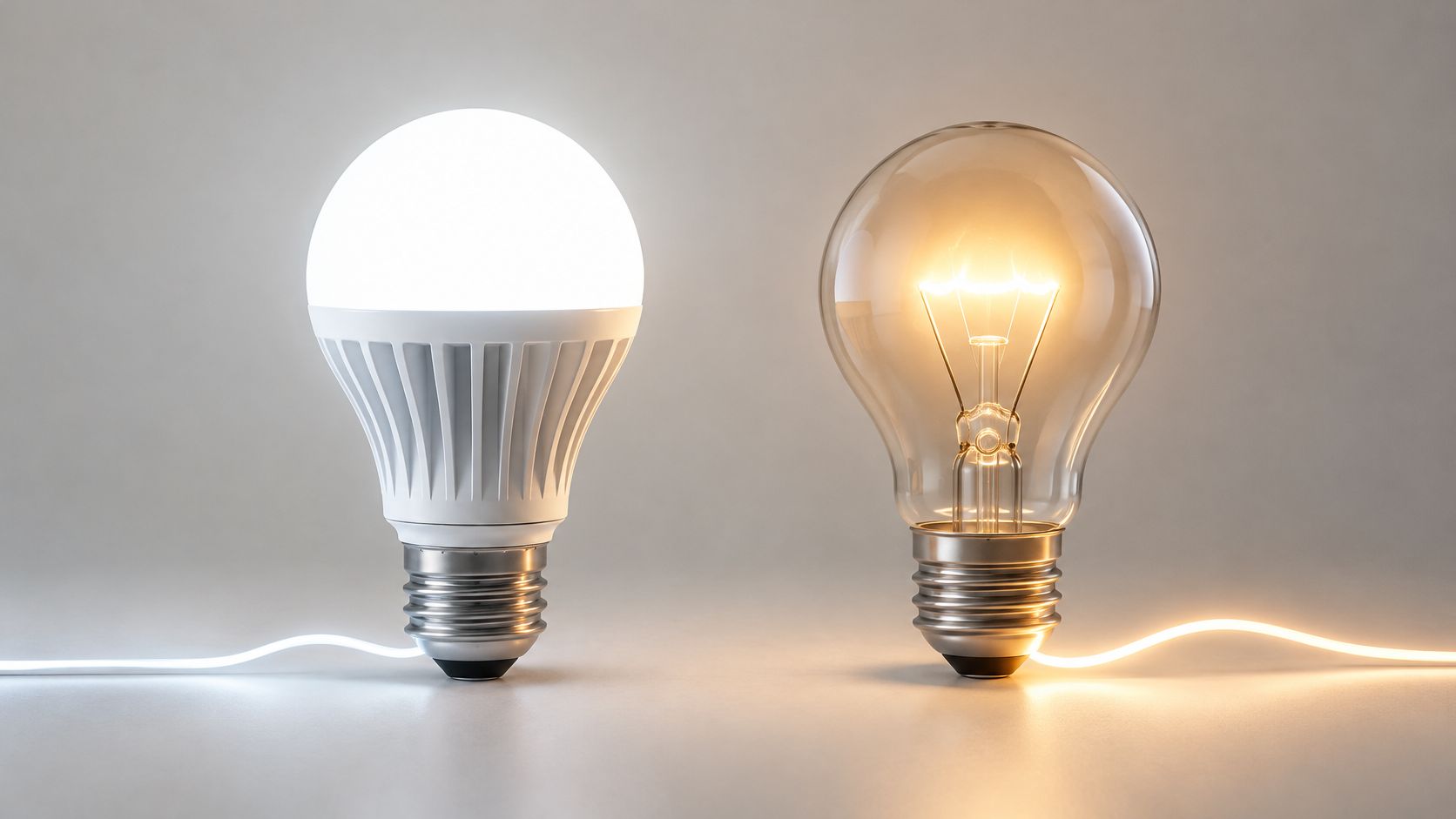
An incandescent lamp turns most of its power into heat. An LED turns a much larger share into visible light, so you get comparable brightness for far fewer watts. The International Energy Agency report on LED lighting sales states that LEDs generally use 80 to 90% less electricity than incandescent lamps and 50 to 60% less than fluorescent lamps. That's why a handful of high use fixtures usually matter more than swapping every closet bulb on day one.
How to Work Out Your Own Payback
Use the wattage difference, daily run hours, and your local rate for each fixture. Kitchen cans, living room downlights, porch lights left on all night, and commercial spaces that run all day pay back first. A little used guest room lamp saves the same percentage, but far fewer kilowatt hours in absolute terms.
Lower lighting load also helps when you're planning bigger work. It won't magically create room for every new appliance, but it can offset part of the demand you're adding elsewhere. If you're combining a 200-amp service upgrade, new circuits, or a garage charger with a lighting retrofit, have the panel capacity checked first, because lighting is only one line in the load calculation. Bundling work can also reduce repeat trips and rework, especially when recessed trims, dimmers, GFCI outlets, and breaker work are already on the list. For context on that piece, see this guide to circuit breaker replacement cost.
Prioritize long run fixtures: Start where lights stay on longest.
Check labels and listings: Look for ENERGY STAR on residential products and DesignLights Consortium listing where commercial products require it.
Check rebates before you buy: Ask whether Xcel Energy or your local utility currently offers lighting incentives, since eligibility often depends on buying listed models.
2. Long Operating Life and Reduced Maintenance
There's no filament to burn out in an LED. It fades gradually as its output drops, instead of failing the way an incandescent does when the filament breaks. That difference is why rated life matters, and why the package claim only tells part of the story.
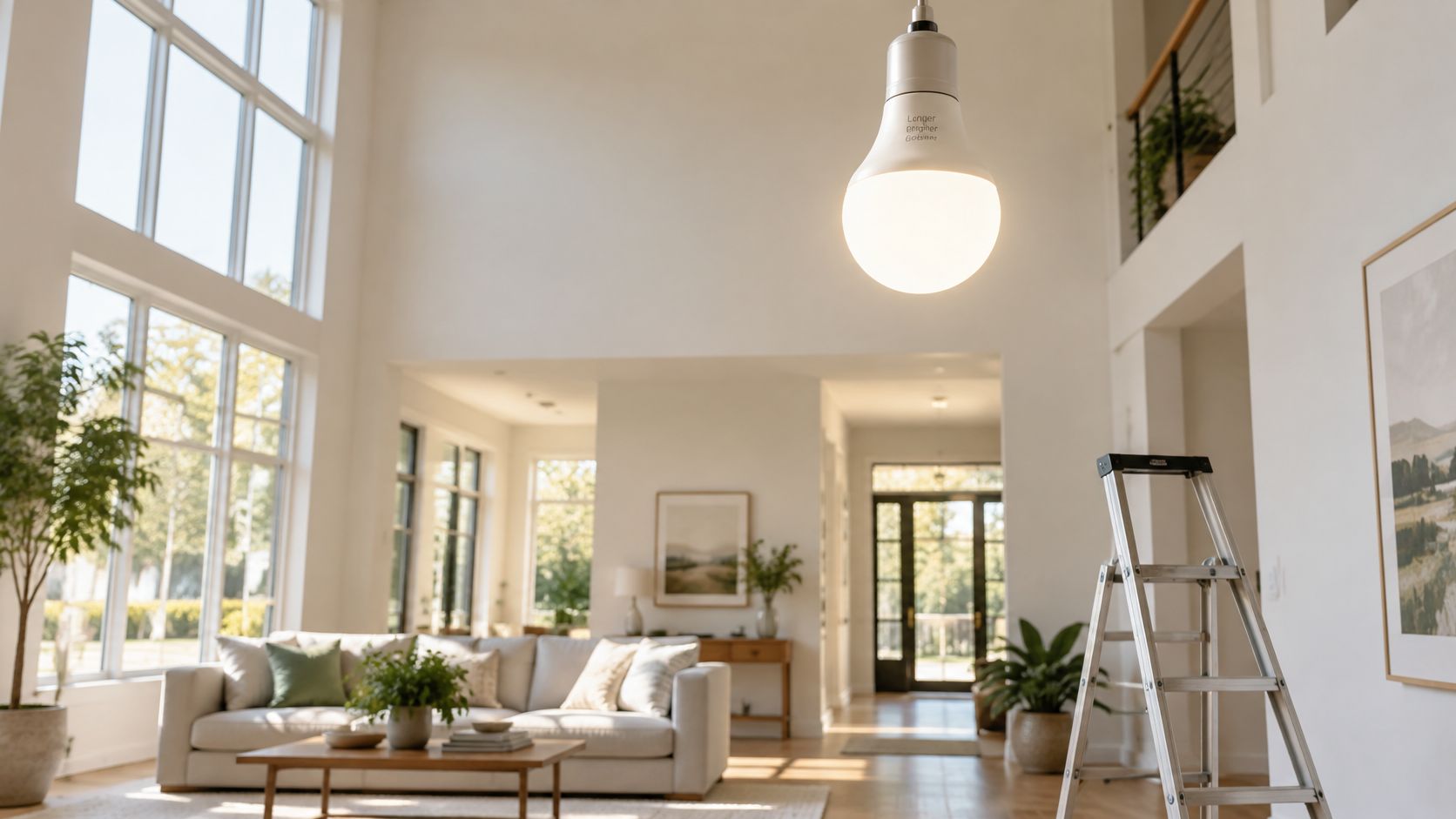
Project Drawdown's LED lighting summary reports that LED products can exceed 25,000 operating hours, compared with approximately 1,000 hours for incandescent lamps and 10,000 hours for compact fluorescent lamps. In a two story entry, a warehouse high bay, or a parking lot fixture, the labor and lift rental usually cost more than the lamp itself. Fewer replacements mean fewer ladder trips, fewer service calls, and less disruption when ceilings are tall or access is restricted.
What Actually Shortens LED Life
Heat is the main enemy. A high rated lamp tucked into a poorly ventilated enclosure, covered by insulation it isn't rated for, or paired with a weak driver can fail early. Ambient temperature, driver quality, and whether the fixture is listed for enclosed or insulated locations matter as much as the hour rating on the box.
Check the L70 rating, not the headline. L70 tells you when output is expected to fall to 70% of its starting level, which is a more useful service measure than a vague lifetime promise.
For long term serviceability, I prefer fixtures with replaceable lamps, modules, or drivers where that option exists. Integrated fixtures look clean, but a failed driver can mean replacing the whole unit. In a rental, office, or hard to reach stairwell, that trade-off is worth deciding before everything is installed.
3. Instant Full Brightness and Cold-Weather Performance
Flip the switch in a cold garage and an LED is on. There's no warm-up ramp and no waiting for a tube to settle into full output. That instant start is a small benefit inside the house. Outside, on a January night, it's the difference between a working security light and a dim, flickering one.
Fluorescent lamps can struggle in low temperatures. They may start slowly, run dim, or flicker while they warm. LEDs are far less bothered by cold, which makes them a practical default for Denver garages, entryways, detached shops, and exterior fixtures that spend the winter below freezing.
Where Instant Light Earns Its Keep
Motion sensor fixtures are the clearest example. A sensor that triggers a lamp needing a warm up period leaves you a few seconds of poor light exactly when you need to see the steps, the lock, or the ice patch. Pair that sensor with an LED and you get full brightness as soon as motion is detected, then the light shuts off without the restrike delays older technologies can have.
Cold tolerance doesn't remove the need to read the label. Before you install an exterior fixture, confirm two things on the product itself.
Location rating: Choose wet location for fixtures exposed to rain and snow, and damp location only where the fixture is protected.
Operating temperature range: Verify the low end printed on the packaging or spec sheet suits an unheated garage or exposed eave.
Sensor compatibility: Confirm the lamp or fixture is rated for use with the motion sensor or photocell controlling it, since some drivers don't behave well on every control.
4. Compatibility with Dimmers and Smart Lighting Controls
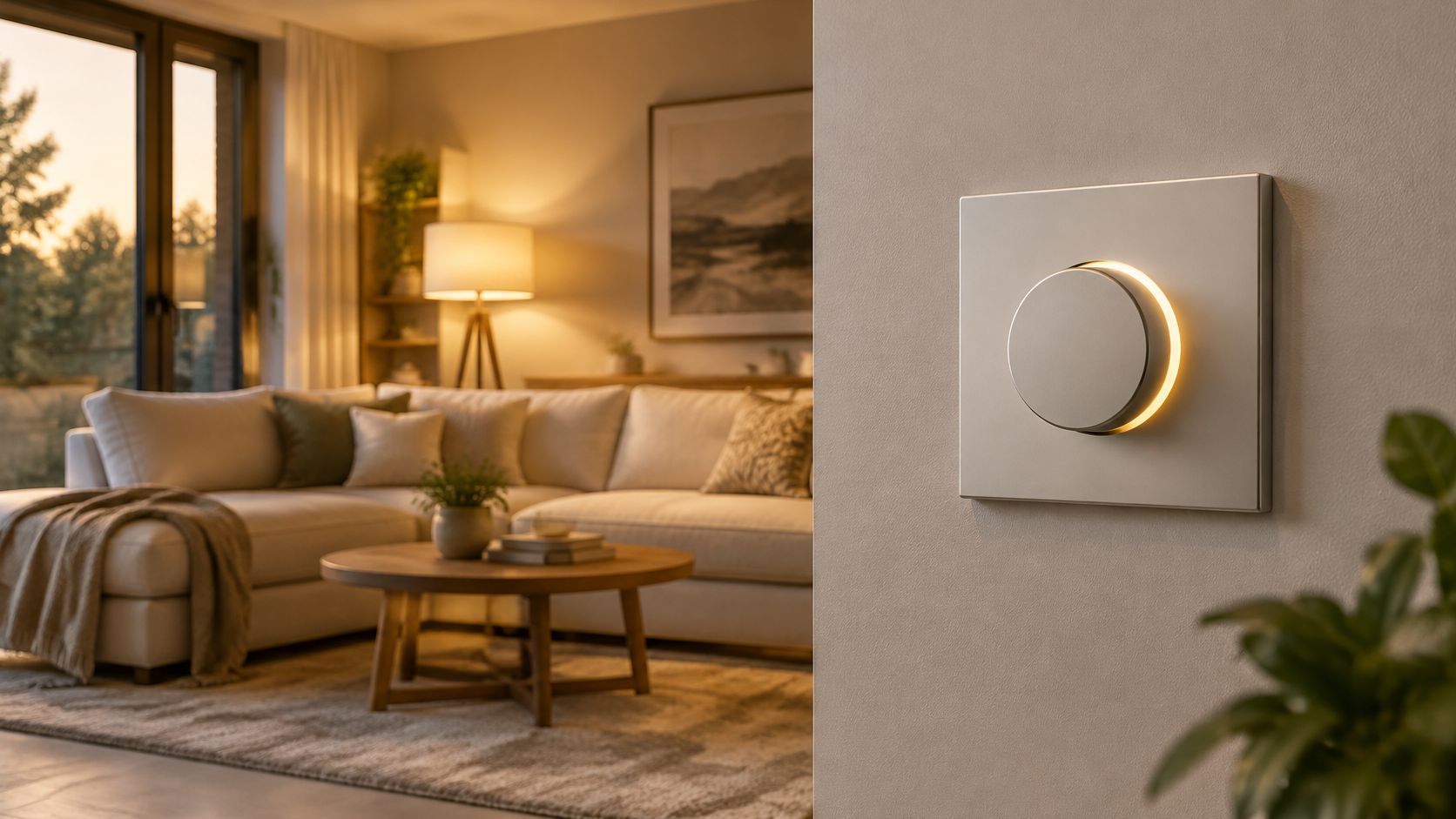
An efficient lamp that flickers, buzzes, or drops out at low dim levels is a bad installation, even if the wattage looks great. LED describes a technology, not a single lighting experience. The U.S. Department of Energy page on advanced LED lighting research identifies glare, flicker, color rendering, and non-visual effects as major areas for improvement, which tells you these comfort issues are real selection criteria, not nitpicking.
Old incandescent dimmers are the usual culprit. They were built for a much heavier resistive load, so a string of low wattage LEDs may fall below the dimmer's minimum and behave badly. The fix is boring and reliable. Match an LED rated dimmer to lamps the manufacturer lists as compatible, and test one room before you buy for the whole house.
Getting Controls Right the First Time
If your lights are misbehaving after a swap, this guide on how to fix flickering lights helps you separate a lamp and dimmer mismatch from a wiring problem that needs troubleshooting. Don't assume every flicker is a bad bulb. Loose connections and failing breakers can produce similar symptoms.
Smart switches and scheduling add another layer. Occupancy sensors in an office, timers on exterior lights, and app control in a living room all cut wasted run time, but they need the right wiring at the switch. Many smart switches require a neutral wire in the box. Check for that neutral before you order devices for an older Denver home, or you'll be choosing between no neutral models and rewiring the switch leg.
5. Directional Light and Flexible Fixture Design
This short clip shows how a focused beam changes what a kitchen island looks like in practice.
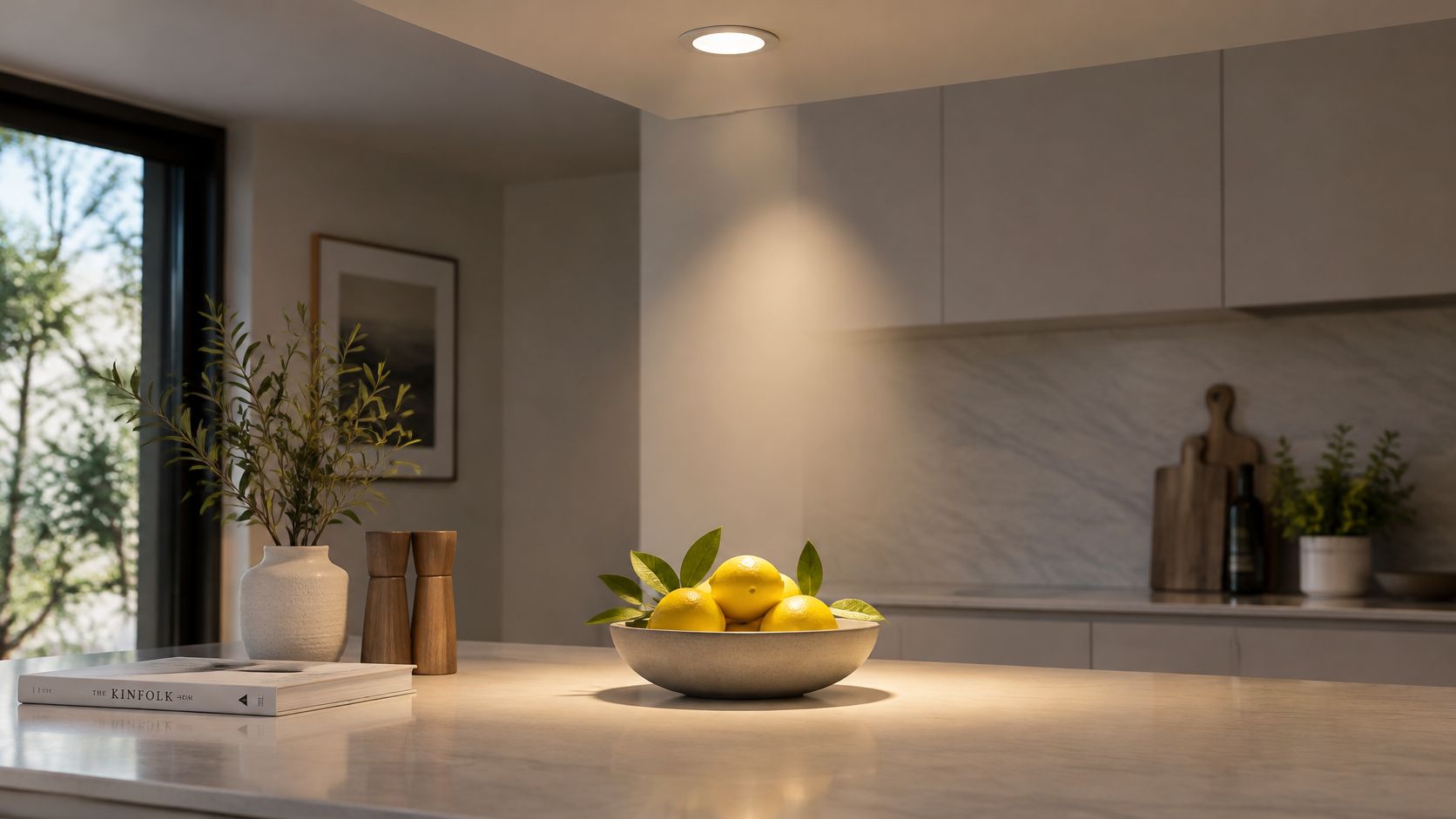
A traditional bulb throws light in every direction, then the fixture tries to redirect it. An LED is a small, directional source from the start, so the fixture can put light on the counter, the desk, or the walkway without wasting as much inside a shade or can. That's what makes slim wafer downlights, under cabinet strips, and low profile track heads practical in ceilings and cabinets that couldn't fit older housings.
It also changes renovation choices. You can replace bulky cans with recessed LED modules, add a ceiling fan with an integrated light kit instead of a separate fixture, or run a strip under a cabinet where a tube never fit well. Before you commit to a layout, it's worth reviewing what drives recessed lighting installation cost, because fixture count, ceiling access, and new switching all change the job.
This photo shows the payoff of aimed light rather than a bare bulb lighting the whole room evenly.
Picking Light That Looks Right
Color temperature: Use warmer light in living areas and bedrooms, and a neutral, cooler tone in kitchens, laundry rooms, and workspaces where you need to see detail.
Color rendering: Look for a CRI of 90 or higher where food, artwork, makeup, or retail merchandise needs to look accurate.
Glare control: Choose shielded trims and sensible beam angles, since a bright exposed diode at eye level is uncomfortable no matter how efficient it is.
Ceiling rating: Confirm recessed fixtures are IC rated when they'll contact insulation.
6. Lower Heat Output and Improved Fire Safety
Hold your hand near a lit halogen can and you'll feel where most of its energy went. LEDs produce far less radiant heat at the lens, so nearby wood, fabric, artwork, and ceiling materials take less thermal punishment. In a small room with several old recessed lights, you'll also notice the space runs noticeably cooler in summer.
Lower surface heat reduces risk, but it doesn't make any fixture safe to install however you like. LEDs still generate heat at the driver and heat sink, and that heat has to go somewhere. Bury a non rated fixture in insulation, seal a driver in a tight box with no airflow, or load damaged wiring with a new fixture, and you've created the problem the upgrade was supposed to solve.
Cooler at the lens doesn't mean cool everywhere. The back of the fixture is where heat management happens, and it's the part homeowners never see.
Installation Choices That Keep the Safety Benefit Real
Use fixtures and lamps with UL or another recognized safety listing, and match the listing to the location. In insulated ceilings and attic adjacent installations, that means recessed fixtures rated for insulation contact. In a bathroom or covered porch, it means the correct damp or wet rating.
Say you're replacing halogen recessed lights in a 1970s ranch with blown in attic insulation. A listed LED retrofit trim is a solid move only if the existing can is in good condition, the trim is rated for that housing, and insulation clearance rules for that assembly are followed. If the can is damaged or unrated, replacing the fixture is the safer call, even though it costs more up front.
7. Durability and Resistance to Shock and Vibration
A filament is a thin wire waiting for a reason to break. Slam a door under a cheap fixture, run a ceiling fan for years, or mount a light where machinery vibrates, and filament and glass tube lamps pay for it. LEDs are solid state devices with no filament and no fragile arc tube, so they tolerate vibration, bumps, and rough handling far better.
That durability has a practical safety side too. There's less risk of broken glass dropping from a fixture in a kid's bedroom, a garage work area, or a commercial kitchen. Many LED fixtures also use enclosed lenses instead of an exposed glass envelope, which keeps the light source protected when a ladder, broom handle, or stored bin catches the fixture.
Places Where Ruggedness Decides the Choice
Ceiling fans are the everyday test case. The light kit rides on a moving fixture for years, and an LED module handles that constant low level vibration without the early failures you'd expect from filament lamps. The same logic applies to warehouse high bays near dock doors, workshop fixtures, and exterior lights on a detached garage that takes wind and temperature swings.
Durability still depends on the fixture you pick, not just the diode inside it.
Impact resistant lenses: Choose them in garages, playrooms, and low mounted exterior fixtures.
Secure mounting hardware: Use properly rated boxes and supports for fans and heavy fixtures, since a durable lamp in a loose fixture is still a hazard.
Prompt replacement: Swap a cracked fixture or exposed driver right away instead of taping over damage, because the electronics inside are not meant to sit open to dust and moisture.
8. Lower Environmental Impact and Mercury-Free Operation
Calling every LED automatically green skips the useful question. Manufacturing an LED and its driver carries an environmental cost, so the honest comparison is over the full life of the lamp, including the electricity it burns every night. On that measure, running the light dominates. The IEA 4E lifecycle assessment summary found that approximately 85% of lighting's environmental impact is associated with use, with manufacturing and end of life accounting for most of the remainder.
That changes the replace now or wait decision. For a high wattage lamp running many hours a day, retiring it early usually makes sense because the wasted electricity adds up fast. For a rarely used lamp that's already fairly efficient, waiting until it fails can be the more sensible call. Run hours and wattage should drive the decision, not a blanket rule.
Mercury, Waste, and Disposal
LEDs contain no mercury, unlike compact fluorescent lamps and fluorescent tubes, so a broken LED doesn't create a mercury cleanup problem. Longer life also means fewer lamps manufactured, packaged, and thrown away over the years. Businesses and municipalities lean on retrofits for exactly this reason, pairing lower energy use with less lamp waste.
They aren't ordinary trash, though. Drivers and circuit boards belong in e waste or lighting recycling programs where available. Check Denver and Colorado household hazardous waste and electronics collection options for old fixtures, and handle any fluorescent tubes you remove under the mercury rules for those lamps. One more judgment call matters. A replaceable LED bulb lets you discard a small lamp at end of life, while a failed integrated fixture can send the whole unit to the waste stream, so serviceability is an environmental choice as well as a maintenance one.
8 Benefits of LED Lamps at a Glance
Benefit | Main Advantage | Key Consideration | Best For |
|---|---|---|---|
Energy efficiency and lower electricity bills | Uses substantially less energy than incandescent lighting and can reduce electrical load | Upfront costs and savings depend on usage; older wiring may need attention | Homes and businesses seeking lower lighting costs or coordinating electrical upgrades |
Long operating life and reduced maintenance | Fewer replacements, less labor, and less disruption | Lifespan depends on heat and product quality; some integrated fixtures are not repairable | High ceilings, hard-to-reach fixtures, and commercial spaces |
Instant brightness and cold-weather performance | Full brightness immediately, including in cold conditions | Outdoor fixtures need appropriate location ratings and temperature specifications | Garages, entryways, exterior lighting, and motion-sensor applications |
Compatibility with dimmers and smart controls | Supports adjustable brightness, automation, and scheduling | Use compatible dimmers and check smart-switch wiring requirements | Homes and buildings seeking flexible lighting control |
Directional light and flexible fixture design | Enables targeted illumination and slim, integrated fixtures | Fixture optics and color quality vary; some integrated units require full replacement | Renovations, recessed lighting, under-cabinet lighting, and ceiling fans |
Lower heat output and improved fire safety | Produces less radiant heat than incandescent and halogen lamps | Correct fixture ratings, ventilation, and installation remain important | Insulated ceilings and spaces where reducing heat is beneficial |
Durability and resistance to shock and vibration | Solid-state construction resists vibration and breakage | Lenses and heat sinks can still be damaged; product quality varies | Ceiling fans, warehouses, and high-vibration or high-traffic areas |
Lower environmental impact and mercury-free operation | Contains no mercury and reduces energy use and replacement waste | Electronic components still require responsible recycling | Sustainability-focused homes and businesses, and mercury-conscious lighting upgrades |
Ready to Put These Benefits of LED Lamps to Work in Your Home?
The benefits of LED lamps hold up when the product, the fixture, and the wiring behind them agree with each other. A lamp with a strong rating still disappoints if it's sealed into an overheated can, paired with a dimmer built for incandescent loads, or installed on a circuit with a loose connection. That's not a reason to avoid LEDs. It's a reason to plan the swap as a small electrical project instead of a grocery store impulse buy.
Start with the fixtures you use most. Kitchens, living rooms, primary bathrooms, exterior security lights, and any commercial space that runs all day deliver the fastest payback and the biggest maintenance relief. Total cost matters more than shelf price here. CLASP's LED lighting page reports that LEDs save consumers between 50% and 70% in total costs compared with alternative lighting technologies, which reflects energy and replacement savings together rather than the bulb price alone.
Then check the details that decide whether you'll like living with the result. Confirm the location rating for wet and insulated areas, match the dimmer and driver before buying in bulk, look for a neutral if you want smart switches, and decide whether replaceable lamps or integrated fixtures suit each location. Bedrooms want warm, low glare light that dims smoothly. Kitchens and workshops want accurate color and enough aimed output on the work surface. Exterior fixtures want cold tolerance and fast response on a sensor.
If the job is just screwing in listed replacement lamps on sound fixtures, most homeowners can handle it with the power habits they'd use for any bulb change. The moment the work involves new recessed fixtures, replacing dimmers, adding circuits, hanging a fan with an integrated light, or figuring out whether your panel can support a charger alongside a lighting upgrade, it's electrician territory. Permits, box ratings, insulation contact rules, and load calculations aren't paperwork for its own sake. They're how the installation stays safe after the ladder is put away.
We handle that side of the work across the Denver metro area, including LED light fixture upgrades, recessed lighting, dimmer and smart switch installation, and ceiling fans with integrated lights. We can also look at the panel and wiring during the same visit, so lighting work can be planned alongside a service upgrade or EV charger installation instead of being redone later. If you're not sure whether your home needs new fixtures, new controls, or just better lamps, ask for an honest assessment before you buy a case of product that doesn't fit your ceilings.
If you're planning an LED conversion, recessed lighting, or new dimmers in the Denver metro area, we can check your fixtures, wiring, and panel capacity and install the upgrades in one coordinated visit. Visit On Time Home Services to schedule an assessment and discuss what your home needs.
Comments